

 Woof Papa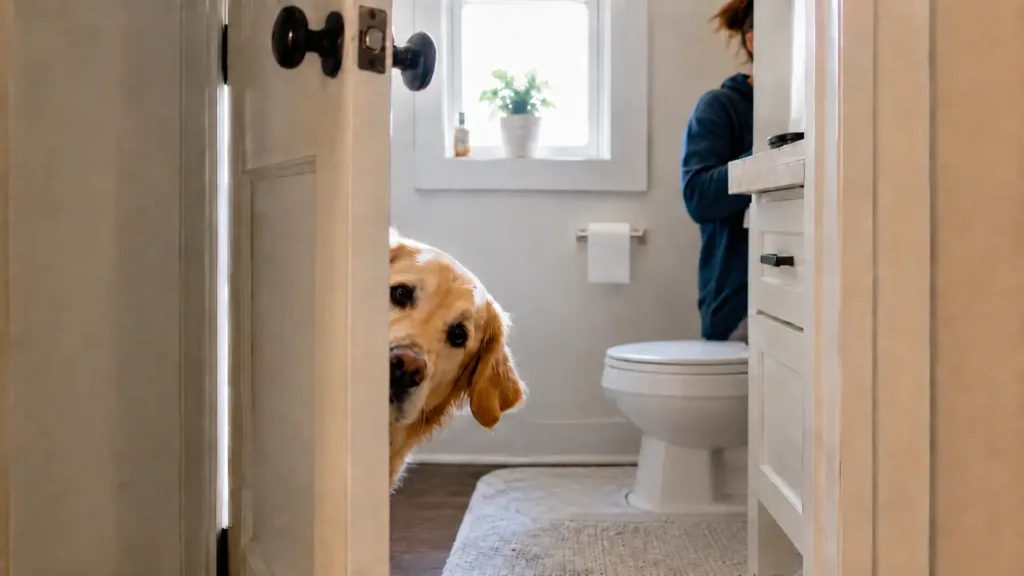
You get up from the couch. Your dog gets up. You walk to the kitchen. Your dog walks to the kitchen. You close the bathroom door and… those little paws are waiting right outside.
If your dog follows you from room to room like a furry shadow, you’re not alone. This is one of the most common things dog owners notice, and it usually says something really lovely about your relationship. But sometimes, there’s more going on beneath the surface.
Let’s look at the real reasons your dog sticks so close, when it’s perfectly normal, and when it might be worth paying a little extra attention.
Table of Contents
- The Main Reasons Your Dog Follows You Everywhere
- It’s a Bonding Thing
- You’ve (Accidentally) Encouraged It
- Some Breeds Are Naturally Velcro Dogs
- Curiosity and Routine
- Could It Be Separation Anxiety?
- When Following Is Normal vs When to Worry
- How to Help a Clingy Dog Feel More Confident
- FAQ
The Main Reasons Your Dog Follows You Everywhere
Dogs are social animals. They’ve evolved alongside humans for thousands of years, and staying close to their person just makes sense to them. But “following you everywhere” can come from a mix of reasons, and understanding which ones apply to your dog helps you respond in the best way.
It’s a Bonding Thing
The simplest explanation? Your dog loves being near you. Dogs form deep attachments to their people, much like young children do with their caregivers. Researchers call this a “secure base effect,” where your dog sees you as their safe person and naturally wants to stay close.
This is especially common if you’re your dog’s primary caregiver, the one who feeds them, walks them, and spends the most time with them. In their eyes, you’re the centre of their world.
Puppies are particularly prone to this. As they grow and gain confidence, many dogs become a bit more independent. But plenty of adult dogs remain happily attached too, and that’s completely fine.
You’ve (Accidentally) Encouraged It
Think about what happens when your dog follows you to the kitchen. Do they sometimes get a little piece of whatever you’re making? When they follow you to the door, do they get a walk? When they come sit next to you on the couch, do you give them a scratch behind the ears?
None of these are bad things. But over time, your dog learns that staying close to you leads to good outcomes. Food, attention, walks, treats. They’re simply doing what works.
This type of learned behaviour is perfectly harmless. It just means your dog has figured out that life is good when they’re near you.
Some Breeds Are Naturally Velcro Dogs
Certain breeds were specifically developed to work alongside humans all day. It’s in their DNA to want to stay within arm’s reach.
Breeds that tend to be especially “sticky” include:
- Labrador Retrievers
- Golden Retrievers
- Border Collies
- Hungarian Vizslas
- German Shepherds
- Cavalier King Charles Spaniels
- Australian Shepherds
If your dog’s breed was originally meant to herd, retrieve, or work closely with a handler, their following behaviour is deeply natural. It doesn’t mean anything is wrong. It means they’re doing exactly what generations of breeding shaped them to do.
Curiosity and Routine
Dogs are curious creatures who pay very close attention to patterns. They know when you usually get up to prepare dinner, when you put your shoes on for a walk, and when you head to bed.
Sometimes your dog follows you simply because they’ve learned your routine and they’re hoping for something fun. Or they’re just genuinely interested in what you’re doing. It’s their version of keeping up with the latest news in the household.
Older dogs or dogs who’ve been with you a long time might follow you more out of habit than anything else. It’s comfortable. It’s what they’ve always done.
Could It Be Separation Anxiety?
This is where things can shift from sweet to concerning. Some dogs follow their owners everywhere not out of love or habit, but because they feel genuinely distressed when separated, even by a closed door.
Signs that following might be anxiety-related include:
- Panting, whining, or pacing when you leave the room
- Destructive behaviour when left alone (scratching doors, chewing furniture)
- Accidents in the house despite being house-trained
- Excessive barking or howling when you’re away
- Refusal to eat when you’re not present
- Trembling or drooling when they sense you’re about to leave
If your dog shows several of these signs, the following behaviour is likely part of a bigger picture. Separation anxiety is a real condition that can cause genuine suffering, and it’s worth addressing with help from your vet or a qualified behaviourist.
When Following Is Normal vs When to Worry
Most of the time, a dog who follows you around is just a dog being a dog. It’s normal, healthy, and a sign of a good relationship.
You might want to look a bit deeper if:
- The following started suddenly after a change (new home, new baby, loss of another pet)
- Your dog seems stressed or panicked rather than relaxed when following you
- They can’t settle or rest unless they’re touching you
- The behaviour is paired with other anxiety symptoms
- Your dog is a senior and the clingy behaviour is new (this can sometimes indicate cognitive changes or pain)
A dog who follows you happily with a relaxed body and wagging tail is very different from a dog who shadows you with tense muscles and worried eyes. Trust your gut. You know your dog.
How to Help a Clingy Dog Feel More Confident
Even if your dog’s following is completely normal, there’s nothing wrong with encouraging a bit of independence. It’s actually good for their wellbeing to feel comfortable on their own sometimes.
Here are some gentle ways to help:
- Practice short separations at home. Step into another room for a few seconds, then come back calmly. Gradually increase the time. No big fuss when you leave or return.
- Give them a “job” in their own space. A stuffed Kong, a snuffle mat, or a chew toy in their bed teaches them that good things happen when they’re on their own too.
- Reward settling behaviour. When your dog lies down calmly somewhere away from you, quietly praise them or toss them a treat. This builds the habit of relaxing independently.
- Create a cosy, safe spot. A comfortable bed or crate (with the door open) in a quiet area gives them their own “place” where they can feel secure.
- Keep departures low-key. If you make a big deal of leaving the room or the house, your dog picks up on that energy. Calm exits and returns teach them that separations are no big deal.
If your dog’s clinginess is rooted in anxiety and these steps aren’t helping, it’s a good idea to work with a certified dog behaviourist or talk to your vet. There’s no shame in asking for help, and the right professional guidance can make a real difference.
FAQ
Is it normal for my dog to follow me to the bathroom?
Yes, completely normal. Your dog doesn’t understand the concept of privacy. To them, you’re just going into another room, and they’d rather be where you are. If it bothers you, gently closing the door and ignoring any whining will teach them to wait outside over time.
Why does my dog only follow me and not other family members?
Dogs often form a stronger attachment to whoever feeds them, walks them, and spends the most one-on-one time with them. It doesn’t mean they don’t love other people in the household. You’re just their primary person.
My dog started following me more after we moved. Is that normal?
Very normal. A new environment can feel uncertain, and your dog looks to you for safety. Give them time to adjust. Within a few weeks, most dogs settle into the new space and relax again.
Should I be worried if my senior dog suddenly becomes clingy?
A sudden change in behaviour in an older dog is always worth noting. It could be related to vision or hearing loss (they stay close because they’re less sure of their surroundings), cognitive decline, or discomfort from a health issue. A vet check is a good idea if the change is recent and noticeable.
Can following behaviour become a problem?
On its own, no. But if it’s driven by anxiety or if your dog truly cannot cope alone, it can affect their quality of life and yours. In those cases, gentle independence training and professional support can help.